
Pine Tree shares practical, down-to-earth guidance on british conifer gardening and evergreen landscaping for readers across the UK.
- 0123456789
- Angle Bd Abdelmoumen & rue soumaya, Résidence
- [email protected]
Pine Tree shares practical, down-to-earth guidance on british conifer gardening and evergreen landscaping for readers across the UK.
 By Eleanor Whitfield
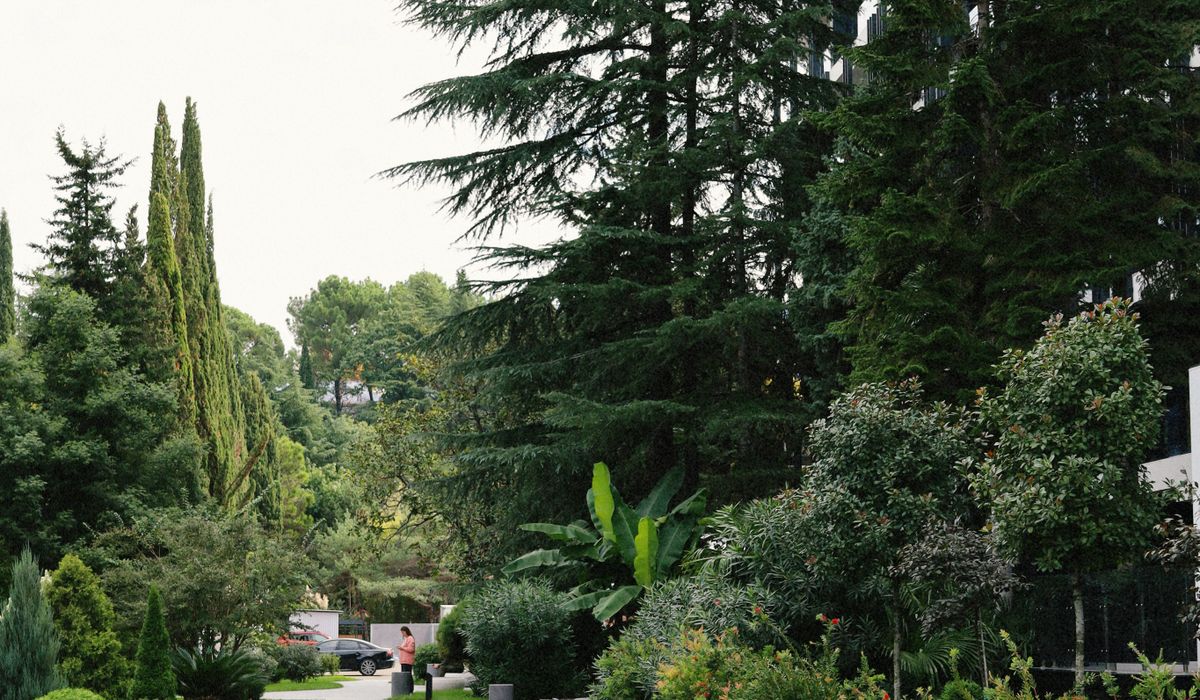
Pines are the backbone of many British gardens. Whether you are growing a stately Pinus sylvestris, a softly domed Pinus mugo, or a golden Pinus cultivar lighting up a border, they bring year-round structure that few other evergreens can match. But they come with a quirk that trips up even experienced gardeners: they will not regrow from old wood.
Almost all other conifers — yew, thuja, leylandii, even most spruces — will send out fresh shoots if you cut back into bare branches. Pines will not. Once a branch has lost its needles and the wood has aged, it stays bare. Cut a pine branch back past the green growth and you have created a permanent stub. That single fact shapes everything about how we prune them.
The good news is that if you understand this limitation, pruning pines becomes straightforward. You simply work with the plant's growth cycle rather than against it.
The ideal window for pruning a pine in the UK is from mid-May to early July, once the new growth has extended but before it hardens. This is when the tree is actively pushing sap and can respond well to light trimming.
In most of Britain, the pine growth flush — those pale, soft "candles" that emerge from the tips of every branch — appears in May. By early June they have lengthened and the needles are just starting to fan out. This is your moment.
If you garden in northern Scotland or on an exposed coastal site, shift the window slightly later — into late June — so the tree has warmth to work with.
The candle is the key to shaping a pine without harming it. A candle is the pale, finger-like shoot that emerges in spring, carrying a cluster of new needles. It is soft enough to pinch with your fingers, which is far kinder to the tree than secateurs.
Candle pruning — often called "candling" — is the technique used by gardeners to keep pines compact and dense. The principle is simple: by shortening the candles, you encourage the tree to produce more buds lower down and to grow more slowly.
Always snap candles by hand rather than cutting them. Snapping damages less tissue, the wound closes quickly, and you avoid leaving a sharp cut that can brown at the tip.
Dead, diseased or broken branches should come out whenever you spot them — you do not need to wait for late spring. Leaving them invites fungal problems and can spoil the shape of the tree.
Where a branch is dead, prune it back to the branch collar — the slight swelling where the branch meets the trunk. Do not cut flush with the trunk; the collar is the tree's own healing tissue and cutting into it slows recovery.
If you are removing a large branch, use the three-cut method to prevent tearing:
For small hedges of pine or dwarf varieties, this level of care may seem excessive — but for any mature tree, it is worth doing properly.
Most pine disasters come from a handful of well-intentioned errors. Avoid them and your tree will reward you with decades of healthy growth.
If a pine has already been badly cut back — perhaps by a previous owner or an over-enthusiastic strimmer — it may slowly fill in around the edges, but deep bare patches usually remain. The best cure is prevention, which means gentle, regular, well-timed pruning from the start.
Think of pine pruning as a slow conversation rather than a single job. A light trim each late spring, a willingness to remove deadwood when you see it, and a steady hand with the candles will keep a young pine shapely and a mature one healthy.
If you are growing several pines — perhaps as a windbreak or in a mixed evergreen border — stagger the work over a few weekends so you can judge each tree on its own merits. Every pine has its own vigour and habit, and the best results come from watching how yours responds year on year.
Get the timing right, respect the old-wood rule, and your pines will remain the calm, architectural anchors of your garden for a very long time.


We are not gonna make spamming
